
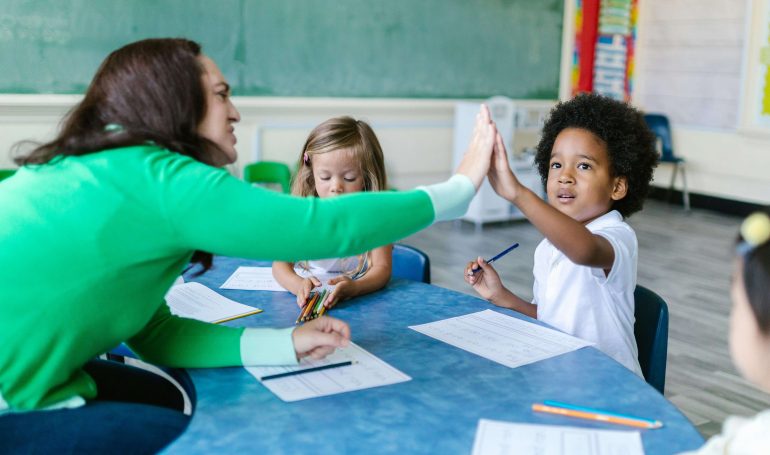
Behind Every Struggle Is a Student Working Twice as Hard
If you watch a classroom, it’s easy to assume that the students who finish quickly and get perfect scores are the ones working the hardest. But as a parent, you probably already know this isn’t true. Often, the hardest working student is the one who struggles, the ones with a learning disability, ADHD, autism, or past trauma. The ones who show up every day and face challenges head-on, even when the odds feel stacked against them.
The hidden effort you may not see, but it’s there:
- The fight to pay attention: A student with learning differences may have difficulty focusing on lessons, filtering out distractions or staying engaged for long periods. While other students can “tune in” automatically, your child has to use every ounce of energy just to remain present in the classroom. That’s hard work in itself.
- Following instructions takes effort: Simple multi-step directions can feel overwhelming for students with learning challenges or executive functioning difficulties. Your child isn’t ignoring instructions, they’re decoding them, breaking them down mentally, and figuring out how to respond. Every assignment is a process, not just a task.
- Executive functioning skills don’t come automatically: Planning, organizing, prioritizing, and remembering steps are skills that many students take for granted. Students with learning differences often have to consciously work on these skills just to complete daily tasks, which adds another layer of effort that isn’t visible on the surface.
- Students with learning disabilities in particular, are expected to access grade level curriculum even though their skills may not be at grade level yet. That means every assignment, every reading passage, every math problem can feel like climbing a mountain even when provided with accommodations.
- Self-regulation can be a constant challenge: Managing emotions, frustration, and impulses can be challenging with these skills don’t come naturally. Your child may be learning to calm themselves, control impulses, and stick with difficult tasks while others may move through lessons effortlessly. Managing frustration and feelings takes energy most of us don’t see.
- Social skills require extra practice: Interacting with peers, understanding social cues, and navigating group work doesn’t come naturally for every child. Students with social anxiety, delayed communication skills, or social pragmatic challenges, often have to think ahead about how to act in certain situations, what to say, and how to fit in. Just another invisible layer of effort that teachers and classmates may not notice.
- Self-advocacy is often innate for many students but for students with learning differences, it’s often a skill that needs to be taught. Asking for help, knowing what you need, and speaking up for yourself doesn’t come automatically. May students have to actively develop these skills while balancing the fear of standing out or being “wrong.”
- Perseverance is part of every school day: Your child faces challenges repeatedly; learning new concepts, revisiting topics, handling mistakes, and yet they keep trying. That persistence is a form of hard work that goes far beyond completing homework or passing tests.
- Confidence and self-esteem are built with every small victory: Many students are learning to believe in themselves despite their learning differences. They’re gaining confidence in tiny increments; finishing a problem, speaking up in class, or managing a task independently. That growth is real work, and it requires courage.
Final Thoughts:
When we look at the classroom through the lens of effort rather than just grades, students with learning differences emerge as some of the hardest workers. They are constantly juggling attention, executive functioning, self-regulation, social skills, and self-advocacy, all while trying to learn the same material as everyone else.
If your child is struggling, take a moment to see the effort behind every assignment, every question asked, and every attempt to keep going. Their hard work isn’t always reflected on a report card, but it’s real, it’s impressive, and it’s laying the foundation for lifelong skills.
It’s important to make sure teachers and other team members see the same effort you do. Your child may have learning differences, but they are working incredibly hard just to accomplish tasks that come naturally to other students. Every bit of their effort deserves recognition, even the smallest gains. When you acknowledge the progress they’re making and the hard work they’re putting in, it builds confidence and a sense of pride that will last far beyond the classroom.